SHS, Parker Project serve over 300 animals in 5 days
In a tremendous effort to help and treat the animal population on Saipan, Saipan Humane Society in partnership with Parker Project served and treated 361 animals in a successful spay and neuter clinic last week at the Kagman Community Center.
SHS shared that from Nov. 9 and Nov. 11-14, the Parker Project team led by veterinarian Dr. Karter Neal, performed 287 surgeries and served 361 animals. In a conversation with SHS co-founder and director of clinical services Ruby Ma, she shared that the team had been hard at work for around 10-hour shifts per day, accomplishing around 40 spay and neuters a day with 80 surgeries on Wednesday alone, a feat for the team especially with one veterinarian “we also did some special surgery too, [such as] mass removal…
“The main organization we are collaborating with this time is called the Parker Project. They have been doing, spay and neuter clinics stateside, and the main vet is Dr. Karter Neal.” Ma said that the past days have gone super smooth with Neal at the helm leading a highly efficient team.
Ma shared the that they wanted to bring the team to Kagman especially after hearing many incidents.
“I think like last year, we have been hearing a lot of dog fight accidents, dog bite accidents. There are a lot of strays in Kagman. That’s why we wanted to host a spay and neuter clinic here. It’s easier for us to find a stray or friendly neighborhood dog that may need help here. The other thing is we are located in Garapan, so Kagman is kind of far away, so we want to bring access to care to the community.”
Parker Project director Alex Mays shared that during one of her interactions with SHS president Lauren Cabrera, she found out about the lack of a veterinarian on Saipan and wanted to help.
“The goal was for us to be able to come in and do this spay and neuter clinic while they’re able to kind of still just provide the veterinary care on that side. We kind of started talking about it a year ago, and Dr. Karter has come in on a lot of my clinics with me, and she’s been the one on top of it to make sure we got the clinic here.”
She shared that aside from the fundraising they did to make it out to Saipan, Neal paid most of the expenses and for her team to come down.
“I was able to kind of have a base to get out here with Dr. Karter. She has a separate non-profit, Asavet Veterinary Charities, and she paid for her whole staff to come out here to provide the services for free. And she brought her surgical supplies, and I brought surgical supplies as well. But I didn’t even have to use any. Now I can hopefully be able to donate that to their clinic. I think, honestly, I want to give a huge shoutout to Asavet Veterinary Charities because they funded so much of their way out here. “
Neal shared that coming to Saipan the main goal was to help counter the overpopulation of dogs.
“So what I have dedicated my life to is [solving dog] overpopulation and really getting spay-neuter done. And that’s where I think our group, Parker Project and Asavet, want to do the spay-neuter, and we want to get the street dog population taken care of. We can definitely fill that gap. The Saipan Humane Society employees and volunteers seem to be pretty well trained. They’re learning a lot, and they’re already doing clinics helping animals.
When asked what common problems animals especially dogs on island face, Neal said heartworm, ticks, and fleas.
“Just because it’s such a tropical area, heartworm is an issue. Just like in the southeast United States and Hawaii, because of the humidity, heartworm is very common. Everybody who owns a dog should have their dog on heartworm preventative [medicine] to prevent heart failure from having worms in the heart. And then again, because of the humid environment, a lot of skin issues and fleas and ticks. So those are the three biggest things. The ticks and the fleas can carry diseases that can make people sick as well. Not just the dogs, but there’s some bacterial infections. I’m not too familiar with the disease problems on the island, but when you’ve got fleas and ticks, it can always be a problem. So really the best thing for a pet owner here is heartworm preventation, flea and tick control, a good diet, making sure they’re spayed and neutered. That keeps them from roaming and fighting and prevents a lot of different types of cancers. And then of course, keeping their vaccinations up. It’s very simple, but it can be hard for people who are challenged to have access to spay and neutering.” said Neal. Mays added that skin conditions may also need constant care.
Overall, May and Neal shared that so far they have enjoyed their experience on Saipan and hope to somehow return again for another clinic.
“I just can’t believe how opening and welcoming everyone is. It’s just been amazing what a community Saipan is. And all the different cultures that come and are on this island and seem to be living together pretty much, you know, with harmony. And a lot of different cultural influences. It’s a really nice place.”
Ma said that along with the Parker Project team, SHS is grateful for the efforts done by their community partners as well.
“All the kennels were provided by the Saipan Mayor’s Office Dog Control Program and then dog control staff is helping us to transport the kennel back and forward. We also worked with Department of Agriculture’s Animal Health Department. They also helped us to transport some community dogs or the ones owners couldn’t bring in. And the Boonie Babies really helped us to catch stray dogs, as a part of the trap, neuter, and release initiative, something we do so we can slowly decrease the overpopulation. We need to thank a lot of people. Also, the Kagman Community Center helped us a lot. They just let us use this place for like 5-6 days straight. So, it’s like really, really helpful,” said Ma.
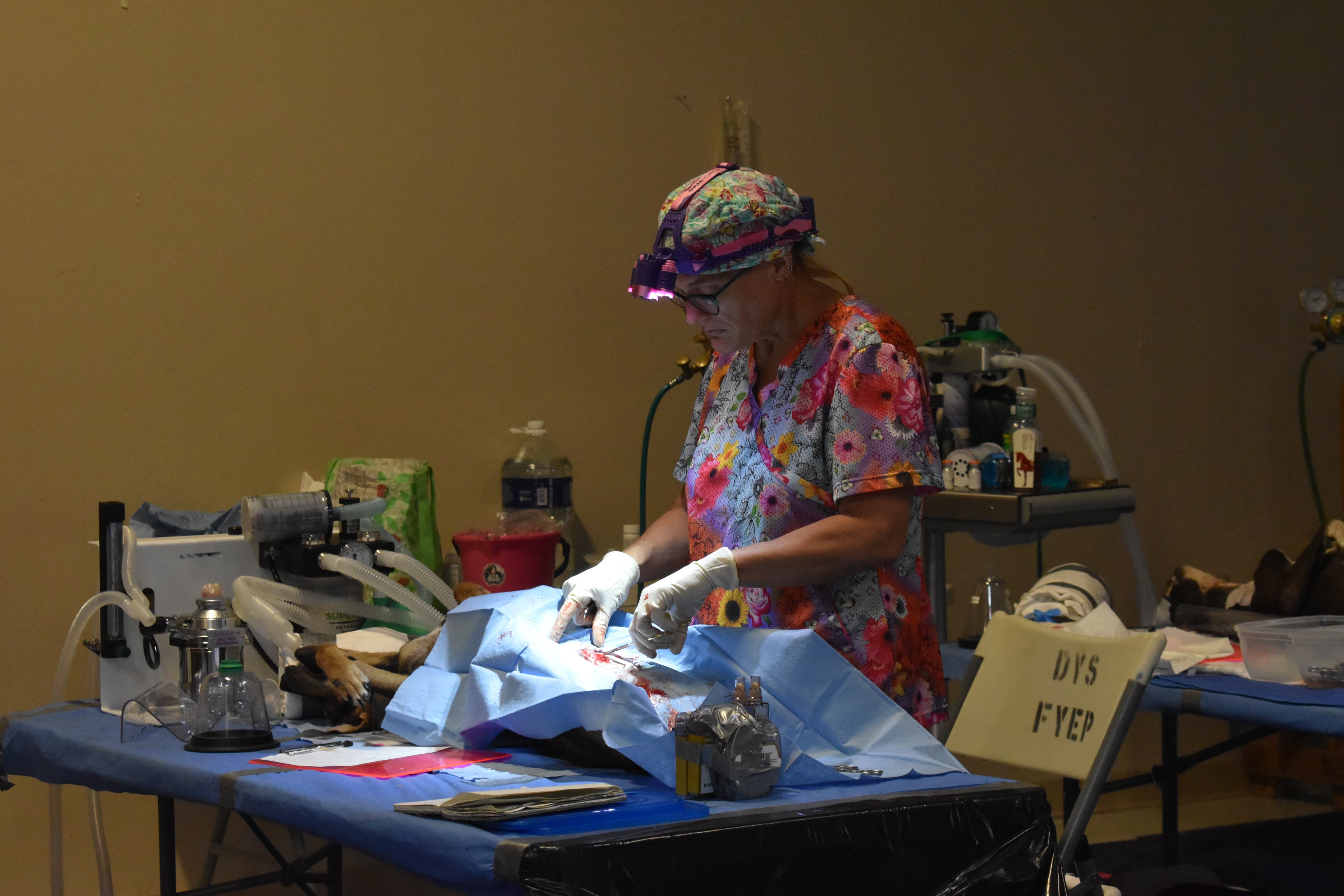
Visiting veterinarian Dr. Karter Neal performs surgery last Thursday at the Kagman Community Center.
-CHRYSTAL MARINO