‘Pursue EVS-TAP for Chinese tourists’
Sen. Jude U. Hofschneider (R-Tinian) has introduced a joint resolution to request Gov. Arnold I. Palacios to advocate for the increased security of the tourism industry, while promoting economic recovery, through the promulgation of the CNMI Economic Vitality & Security Travel Authorization Program and other measures.
That program was one of the recommendations of 902 Consultation special representatives in their report dated May 15, 2019, to then-president Donald Trump. As envisioned by the 902 panels, the CNMI Economic Vitality & Security Travel Authorization Program or EVS-TAP would be a subprogram of the Guam-CNMI Visa Waiver Program that balances visitor ease with enhanced security provisions and transparency.
According to the U.S. Department of Homeland Security, the CNMI EVS-TAP will allow prescreened nationals of the People’s Republic of China to travel to the CNMI without a visa under specified conditions.
Hofschneider’s Senate Joint Resolution 23-07 asks Palacios to request for the publication of the interim rule creating the CNMI EVS-TAP by DHS.
The resolution requests the governor to seek regulatory amendments to the CNM-Only Transitional Worker program to extend the list of countries whose nationals are eligible to participate in the H-2B nonimmigration worker program, similar to those seeking participation in the CW program.
The resolution also urges Palacios to initiate communication and collaborative channels with the Committee on Foreign Investment in the United States, or CFIUS, to provide information on proposed foreign investments for consideration and review of the national security implications of such investment, if any.
Hofschneider stated in the resolution that, in the absence of actions taken to rebuild the CNMI’s China market, the Legislature request that a plan be submitted to the Legislature on the steps proposed by the CNMI government to rebuild economic activity, government revenues, and tourism arrivals that will meet the needs of the government and community to the levels seen prior to the COVID-19 pandemic.
Such a plan should include impacts of the pivot from the China market on employment, economic activity, and the ability for the government to meet its obligations from alternatives being pursued outside of the China tourism market, he said.
According to the joint resolution, the CNMI faces significant challenges, including reduced government revenues, diminished resources for public services, and prolonged stagnation of the commercial sector due to the global pandemic.
Prior to the pandemic, tourism arrivals to the CNMI exceeded 500,000 per year, with visitors arriving primarily from South Korea, China, and to a decreasing extent, Japan.
The fiscal year 2023 arrivals of 194,661 represents a 54% decline from arrivals seen in fiscal 2019.
Arrivals from South Korea have fallen by 17% since fiscal 2019, Japan arrivals by 38%, and arrivals from China are 98% below pre-pandemic levels.
Since the pandemic, geopolitical tensions between China and the United States have grown and impacted regional stability in the Pacific.
This tension prompted Palacios to announce his intent to pivot away from the CNMI’s reliance on the Chinese tourism market, which was he CNMI’s second largest market prior to the pandemic.
Hofschneider pointed out, though, that the CNMI alone has neither the expertise to determine national security implications of foreign investments nor the resources to ascertain the security of proposed investments. That’s where the CFIUS can come in. Hofschneider said the committee provides a framework to review and mitigate potential security risks from foreign investments, including those from China.
Under the CW Program, Chinese nationals are permitted entry into the CNMI for a period of one year for the purpose of employment. Hofschneider said the CW Program has been instrumental in supplementing the domestic workforce, but it can be improved to better meet public safety and national security needs of the community.
As a result of a previous 902 Consultation, nationals from the People’s Republic of China were allowed to enter and stay in the CNMI without a vis for business or pleasure for not more than 14 days under the discretionary parole policy of the U.S. Customs & Border Protection. That became effective beginning Oct. 3, 2019.
Hofschneider said the CNMI unequivocally supports the U.S. in its national and global interests. However, he said, national interests should include the economic viability of the CNMI as a member of the American political family, and the unique and complex conditions in which the CNMI has to contend with in order to stimulate and recover economic activity.

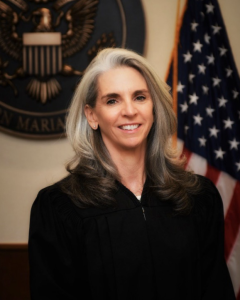
Sen. Jude U. Hofschneider