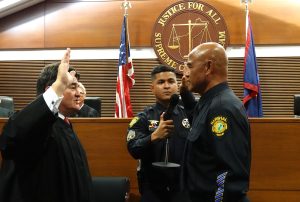
‘Authority to issue subpoenas a critical check-and-balance on OAG’
Attorney General Edward Manibusan has asserted that the authority to issue subpoenas serves as a critical check-and-balance on the Office of the Attorney General.
In a letter to Senate President Edith E. DeLeon Guerrero (D-Saipan) on Friday, Manibusan said initiating a subpoena involves a request by their office and subsequent issuance by the clerk of court, lending judicial weight to the process.
Manibusan’s letter underscores the importance of House Bill 23-22 to combat crime, curb corruption, and safeguard the interests of Commonwealth citizens. Manibusan also wrote the letter to clarify what he described as “misinformation” propagated by the Office of the Public Defender regarding the bill.
Rep. Marissa Renee Flores (Ind-Saipan) introduced the bill last March to create an investigative division within the OAG, codify its investigative subpoena power, and improve the investigation of cases involving public corruption.
The House passed the legislation on May 10, 2023, and it was transmitted the following day to the Senate. The bill is now with the Senate Judiciary, Government and Law Committee chaired by Sen. Celina R. Babauta (D-Saipan).
Manibusan said House Bill 23-22 guarantees the right to legal representation for individuals who may be subjected to a subpoena.
He urged the Senate to bring the legislation to the floor for a vote. “Passing this significant legislation would signify unity with our community in combatting government corruption and other criminal activities within the Commonwealth,” he said.
Manibusan said he firmly believes that, as the CNMI’s attorney general, embedded within his office’s constitutional obligation to prosecute violations of CNMI law is the authority to investigate and issue subpoenas to procure essential documents and witness testimonies.
By codifying these powers into law, they establish clear boundaries, crucial in maintaining an effective check-and-balance system within the government, he said.
As for the alleged misinformation by the OPD, Manibusan concedes that the Attorney General Investigative Division already exists and that Public Laws 18-13 and 18-14 clarify and recognize that AGID investigators are law enforcement officers. He said the proposed bill primarily aims to refine and articulate AGID’s responsibilities.
“It does not duplicate government agencies or services,” said Manibusan, adding that the AGID operates within the OAG, supporting their mandate to prosecute Commonwealth law violations.
Headed by a chief investigator and supported by additional investigators, the AGID aids in investigations conducted by the OAG, facilitating the prosecution of cases in court. Similar to practices in other states and territories, their investigative division functions independently, addressing reported corruption and criminal activities that fall beyond the tasks of other law enforcement agencies.
Manibusan said these investigations often encompass allegations against law enforcement personnel, suspected misconduct by government officials, violations of fiduciary duties, and breaches of the Government Ethics Code, while also offering investigative support to the Department of Public Safety, the Office of the Public Auditor, and other government bodies.
He also clarified that House Bill 23-22 does not impose additional financial costs on the CNMI government. Manibusan noted that the AGID currently operates using funds from the annual general fund appropriations of the OAG. He said funding for the AGID is already provided in the Fiscal Year 2024 Annual Appropriation of Public Law 23-09.
If the proposed bill is approved, the AG said, the bill will not impact the budgets of DPS, the OPD, or any other law enforcement or government agency.
Manibusan said any potential cost increases linked to investigative needs would follow the standard appropriation process similar to any other agency funding, ultimately stemming from the OAG’s budget appropriation.
He said House Bill 23-22 aims to codify the subpoena authority of the OAG.
Presently, both the House and Senate wield subpoena powers through the Legislative Investigations Act.
Manibusan noted that Senate Bill 23-18 has been introduced to grant subpoena power to legislative delegations.
Additionally, he said, the OPD possesses explicit subpoena power for investigations and audits.
House Bill 23-22 merely extends similar subpoena authority to the OAG, he said, aligning with its constitutional obligation to prosecute violations of Commonwealth law.
He said challenges to subpoenas can be pursued in court, ensuring a fair process akin to the oversight applied when the Legislature issues subpoena.
Manibusan said prosecuting attorneys, bound by oaths of office, operate within legal confines and prioritize the pursuit of justice.
“Subpoena issuance will be anchored in the quest for justice and not merely wielded as prosecutorial discretion vested in the attorney general under the CNMI Constitution,” he said.
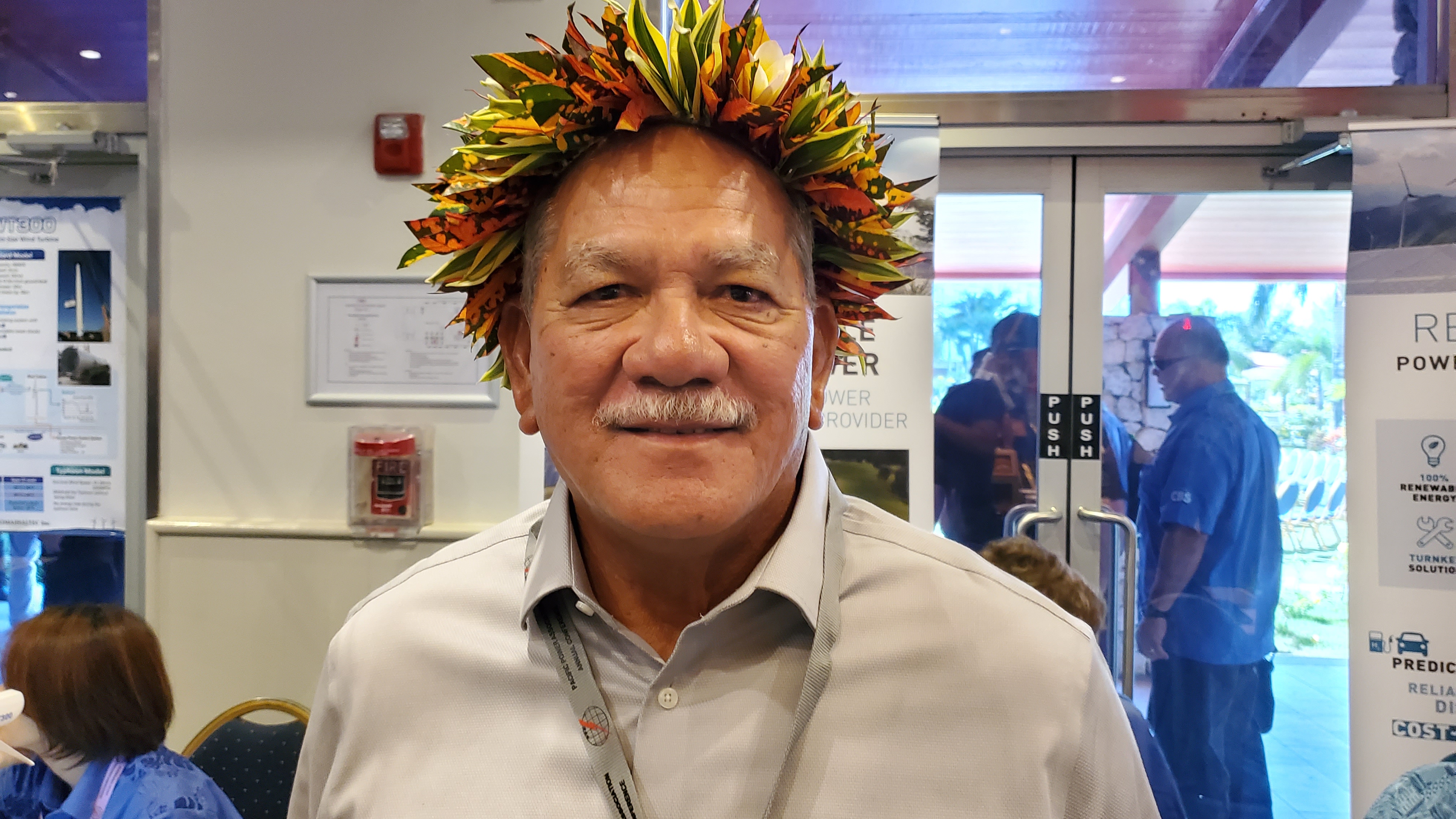
Edward Manibusan