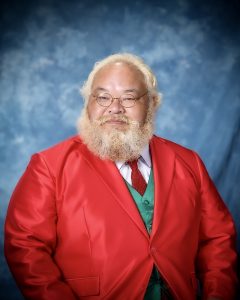
Ayuyu: Politics may also be driving up prices on Tinian, Rota
Businessman Jose C. Ayuyu, who is a newly-appointed member of the Commonwealth Ports Authority board, underscores the need to have a comprehensive review of why certain commodities are expensive on Tinian and Rota, believing that a lot of it is driven by politics.
Speaking at a confirmation hearing Friday before the Senate Committee on Executive Appointments and Government Investigations, Ayuyu said the cost of living on Rota and Tinian has always been a “very interesting” subject for many years. Ayuyu said he has had some conversations with his colleagues about supply and demand and how that drives the price.
“We have a company, let’s say for example, [on] Rota, Tinian, and Saipan that monopolized the ports over the years and the interesting thing about it is when I mentioned politics, sometimes the agreement or the franchise is not even up; they already renewed it,” he said, so there’s just no chance for the community to seek out competitive people to run the ports.
One of Ayuyu’s goals on the CPA board is to review these arrangements for an opportunity to get these companies to be efficient in what they do and pass those savings to the consumers.
He said he has been in business for a long time and there are two choices to make when increasing prices.
“You can price yourself in such a way that you make more than enough money that you need versus ‘Hey, you know what, if I increase my price, I need to be reasonable to the community,’” he said.
Ayuyu is also interested in looking at the reinvestment plans of these companies. He noted that this has never been looked at very closely.
“We assume that these people are behaving and doing things on behalf of the community. But we don’t know. And I’ve never heard of anybody reviewing these arrangements,” he said.
Ayuyu agreed with newly appointed CPA board member Steve King Mesngon during the confirmation hearing that they need to provide a competitive atmosphere.
Ayuyu recalled that when he first opened McDonald’s on Saipan and when Wendy’s came in, people would ask him if he’s worried about it. He said “no” as he believes competition is very good as it keeps him on his toes.
Ayuyu feels that, with exclusive concessions at CNMI airports and seaports, the concessionaires control everything that comes into the islands.
He said it’s very important for the community to know that the price the concessionaires are charging for all the commodities that are coming in is reasonable when compared to other jurisdictions.
“And if it is an overcharging issue, maybe there’s something that we need to sit down with them and say ‘Hey, you know what, this is what we see in Hawaii. You’re way beyond,’” he said.
Ayuyu said the CPA board of directors hold the permitting authority and they can tell that to concessionaires.
He said since these are franchises or exclusive agreements, the government should be able to have access to their financials. Ayuyu said he does not know if that’s happening, whether every year they have an audited financial statement given to CPA.
“The CPA financial controller should take a look at that and say, ‘You know what, your profit margin is 20%. The average industry in the U.S. is 10%. Hey, there’s something really wrong here. You are pocketing more money than you should. Let’s work out something. That difference in 10% can go into potential savings to the community,’” he said.
Ayuyu said these companies may be doing the right thing, but he does not know as nobody has looked at the details.
As for any reinvestments, he said he does that with his own business every seven years by making sure he saves enough money so he can reinvest in the company.
In the case of port concessionaires, Ayuyu said the exclusive agreement with the government should mean they have to have a plan. For example, he said, if a crane lasts 10 years, the company should not wait until it breaks down.
“Because if it breaks down, who suffers? Not the company, it’s the community,” said Ayuyu, adding that a lot of these costs are unnecessarily passed on to consumers because these operators don’t know what they are doing and are not planning.
He can almost guarantee that there’s a lot of inefficiencies and everyone is paying the price for that.
“I may be right or wrong, but this is something that I want to look at,” he said.
At some point, Ayuyu said, he will probably recommend to the CPA board to ask the Legislature to stop this habit of renewing the concession seven years even before it expires, “because the board members are in collusion with the people that are operating all of these businesses.”
He said they should make it mandatory that, possibly five years before the expiration of the agreement, they should open it up regardless of who are the CPA board members.
“Let’s face it, it’s a small community. And so everybody say, ‘Hey, before we get out, let’s just renew this exclusive agreement and let’s just tie everybody up for the next 20 years.’ Which is ridiculous! Really, it’s not fair to the community,” Ayuyu said.
If the company is running an efficient operation, then there’s nothing to be ashamed and it should share with the community that the company is doing the right thing, he added.
Ayuyu said the CPA board has an obligation to look into it. He said failing to check this deprives the community of the ability to decide on who is the best operator or business to run the ports.
“Again, I’m not saying anything going on is wrong. I may be corrected. But I’ve looked at it from a fairness point of view that, if a business person makes money, I think it’s to the benefit of the community also,” he added.
Ayuyu, who is the president and chief executive officer of McDonald’s of Saipan and Guam, represents Saipan and the Northern Islands on the CPA board.

Joe C. Ayuyu