Kilili re-introduces bill for better census data for CNMI, other territories
Delegate Gregorio Kilili C. Sablan (D-MP) has re-introduced this week a bill that seeks to include the CNMI, Guam, American Samoa, and the U.S. Virgin Islands in a federal mid-decade census of population. Sablan also disclosed in his e-kilili newsletter over the weekend that the National Fish and Wildlife Foundation is in the final stages of awarding $6.28 million for four conservation projects in the CNMI.
Sablan’s bill, cited as the Insular Area Mid-Decade Census Act, proposes to amend Title 13, U.S. Code, to direct the secretary of Commerce to conduct the mid-decade census of population for the territories.
Under the legislation, the Commerce secretary “shall, in 2035 and every 10 years thereafter, take a mid-decade census of population as of the first day of April of the applicable year” for each of the territories.
Sablan stated that the mid-decade census shall begin in 2035 and between the existing decennial censuses in the U.S. Insular Areas.
He said up-to-date and contemporary data collection occurs in the 50 states, the District of Columbia, and Puerto Rico on an annual basis via the American Community Survey, “Unfortunately, the Insular Areas are not included in the ACS. Good policy relies on the availability of good data, which is often not available for the insular areas,” the delegate said.
Sablan noted that implementing a mid-decade census is a step in the right direction toward achieving data equity.
Regarding the $6,282,581 in total conservation work projects, Sablan said the potential awards are $3,772,420 for Johnston Applied Marine Sciences, $1,411,751 and $98,410 for Pacific Coastal Research Planning, and $1 million for the Office of the Governor.
The $3.77 million award for Johnson Applied Marine Sciences is intended to restore 20 acres of coral reef habitat along Saipan’s west coast with genetically-diverse and thermally-tolerant coral communities.
The delegate said the project will reduce storm-driven coastal flooding and erosion while also increasing capacity for coral restoration and improving the resilience of coral stock.
The $1.4 million award for Pacific Coastal Research and Planning is intended to implement natural shoreline enhancements and support green stormwater infrastructure along Saipan’s Quartermaster Road intersection.
Sablan said the project will create a more resilient shoreline, improve water quality, and protect critical habitat and infrastructure.
He said the $98,410 award also for Pacific Coastal Research and Planning is for removal of the derelict fishing vessel Lady Carolina from the reef in the Saipan lagoon.
The delegate said the $1 million for the Office of the Governor is needed to enhance inter-island collaboration and build capacity among a working group of researchers, biologists, medicinal practitioners, and the community for increased resilience of native medicinal plants.
He said the project will establish methods needed to improve green space and expand and preserve the use of indigenous traditional knowledge.
Sablan said these four projects are still under consideration with the National Fish and Wildlife Foundation and that final announcements are expected soon.
The NFWF is a nonprofit organization created by the U.S. Congress that attracts investments for conservation and encourages locally-supported, voluntary stewardship of fish, wildlife, and plants on private and public lands.
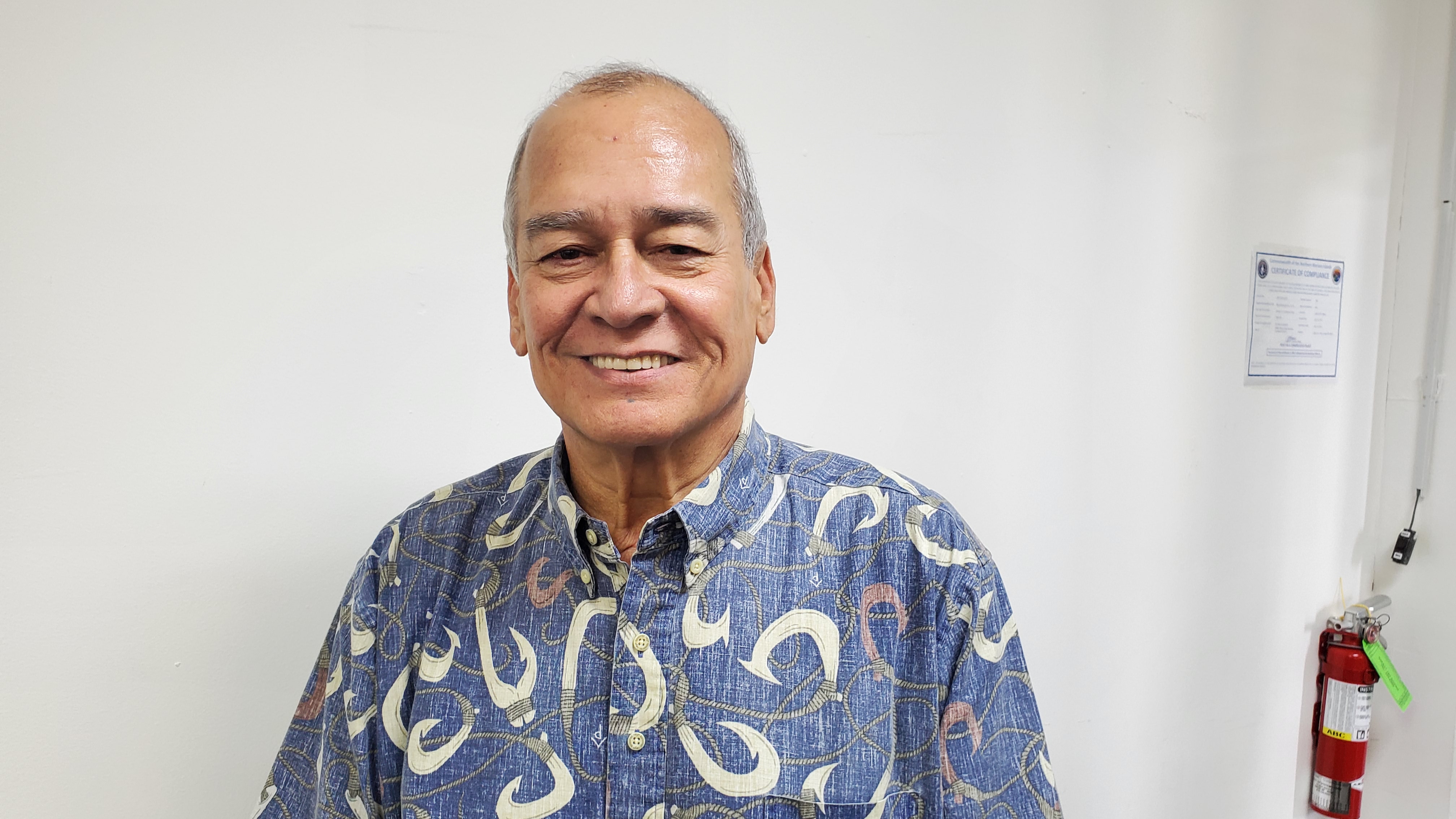
Gregorio Kilili C. Sablan