Lawyers propose creating CNMI grand jury process
A House of Representatives bill that aims to give investigative subpoena powers to the Office of the Attorney General is inappropriate and cedes too much power to the AG without a compelling government interest where there are lesser restrictive means, according to veteran lawyer Robert T. Torres last Monday, whose position is concurred by 15 other CNMI lawyers.
Instead, Torres suggests creating a law that will establish the “grand jury” process in the CNMI. He said establishing the grand jury process protects the due process of citizens in such investigations.
In a letter to Senate President Edith E. DeLeon Guerrero (D-Saipan) and Sen. Celina R. Babauta (D-Saipan), Torres said Article 1 of the Constitution recognizes that personal rights are paramount and the existing statutory and investigative powers of the Department of Public Safety and the Office of the Public Defender are enough for investigations.
Torres and 15 other lawyers provided the Senate Judiciary, Government and Law Committee chaired by Babauta with supplemental comments regarding House Bill 23-22 that remains pending before the committee.
H.B. 23-22, authored by House Judiciary and Governmental Operations Committee chair Rep. Marissa Renee Flores (Ind-Saipan), will create an investigative division within the OAG, codify investigative subpoena power, and improve the investigation of cases involving public corruption.
The House passed the legislation, H. B. 23-22, House Substitute 1, on May 10, 2023 and was subsequently transmitted the following day, May 11, to the Senate. The bill is now with the Senate JGL Committee.
In his letter to DeLeon Guerrero and Babauta, Torres said that, rather than having an unchecked OAG given blanket subpoena power to compel production of documents and testimony without protections, the establishment of the CNMI grand jury would ensure that indictments charged by a grand jury are supported by probable cause.
With a grand jury established, he said the AG can investigate and present cases to that body as he pursues investigations of criminal cases.
At the same time, Torres said, the grand jury can review the case presented and return an indictment if appropriate based on probable cause.
He said a grand jury made up of CNMI citizens can decline to return an indictment if the evidence is lacking as to probable cause.
Another important reason, he said, to have the grand jury law established is that if the grand jury returns an indictment, an arrested person would not have a right to a preliminary hearing since probable cause has been found by the grand jury.
Similarly, he said, if there is no grand jury indictment, the arrested person would have the right to a preliminary hearing with 10 days of arrest.
Torres said the materials that he submitted to the Senate JGL Committee were provided with the assistance of the National Association of Criminal Defense Lawyers, including its Legislative Advocacy Network.
Torres has been a member of NACDL since 2000. The association advocates for justice in criminal cases and ensuring due process for criminal defendants.
He said they have asked for and received a response from NACDL to assist the CNMI Legislature in reviewing criminal justice legislation to provide authorities and resources to ensure a balanced view of proposed legislation beyond those comments from the OAG.
Torres reiterated their position to H. B. 23-22 and asserted that, as proposed, the bill should be rejected and shelved.
“There are more appropriate statutory approaches in criminal justice reform that protects our citizens while allowing for law enforcement investigations,” he said.

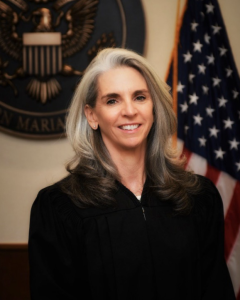
Lawyer Robert T. Torres suggests that establishing a grand jury process protects the due process of citizens in investigations.
-FERDIE DE LA TORRE