Manibusan: Solid Waste Revolving Fund bill would greatly benefit DPW’s efforts
Attorney General Edward Manibusan informed the Senate Committee on Fiscal Affairs yesterday that there are no apparent legal impediments to the passage of a bill that seeks to allocate 10% of excise taxes to the Solid Waste Management Revolving Fund.
Manibusan told Sen. Donald M. Manglona (Ind-Rota), who chairs the Senate Committee on Fiscal Affairs, that House Bill 23-26 would greatly benefit the Department of Public Works in its efforts to manage solid waste for the CNMI.
Introduced by Rep. Blas Jonathan T. Attao (Ind-Saipan) on March 9, 2023, House Bill 23-26 proposes to amend the Commonwealth Code to reinstate and allocate 10% of excise taxes from the current 7% for the Solid Waste Management Program and deposited into the Solid Waste Management Revolving Fund to be expended by the DPW secretary. The House subsequently passed the bill and forwarded it to the Senate for action. It was Manglona who asked the Office of the Attorney General for comments on the legislation.
Manibusan said the bill is consistent with the legislative intent of Public Law 13-42 that established the Solid Waste Management Revolving Fund.
He said the proposed bill will support DPW’s mission to operate the Marpi Landfill in compliance with CNMI and federal regulations, including permit compliance requirements.
This allocation was previously repealed or suspended, Manibusan said, to the detriment of the DPW in the area of solid waste management.
It was determined back in 2002 that the funding required to cover all aspects of solid waste management within the CNMI would require approximately $3.8 million per annum.
House Bill 23-26 will reinstate the funding and raise it to 10% of excise taxes. The House of Representatives Ways and Means Committee deemed it critical and necessary to ensure that serious health, safety, and environmental consequences are avoided through adequate funding of the Marpi Landfill to ensure its sustainability.
The Marpi Landfill, a 26-acre waste management facility with six cells of two and a half million cubic yards of airspace, began operating in 2002.
The Ways and Means Committee said a feasibility study showed that 28% of the facility’s space has been exhausted as of February 2019, and cells 1 and 2’s lifespan was approximately six years, down to about four years by now, or around 2025.
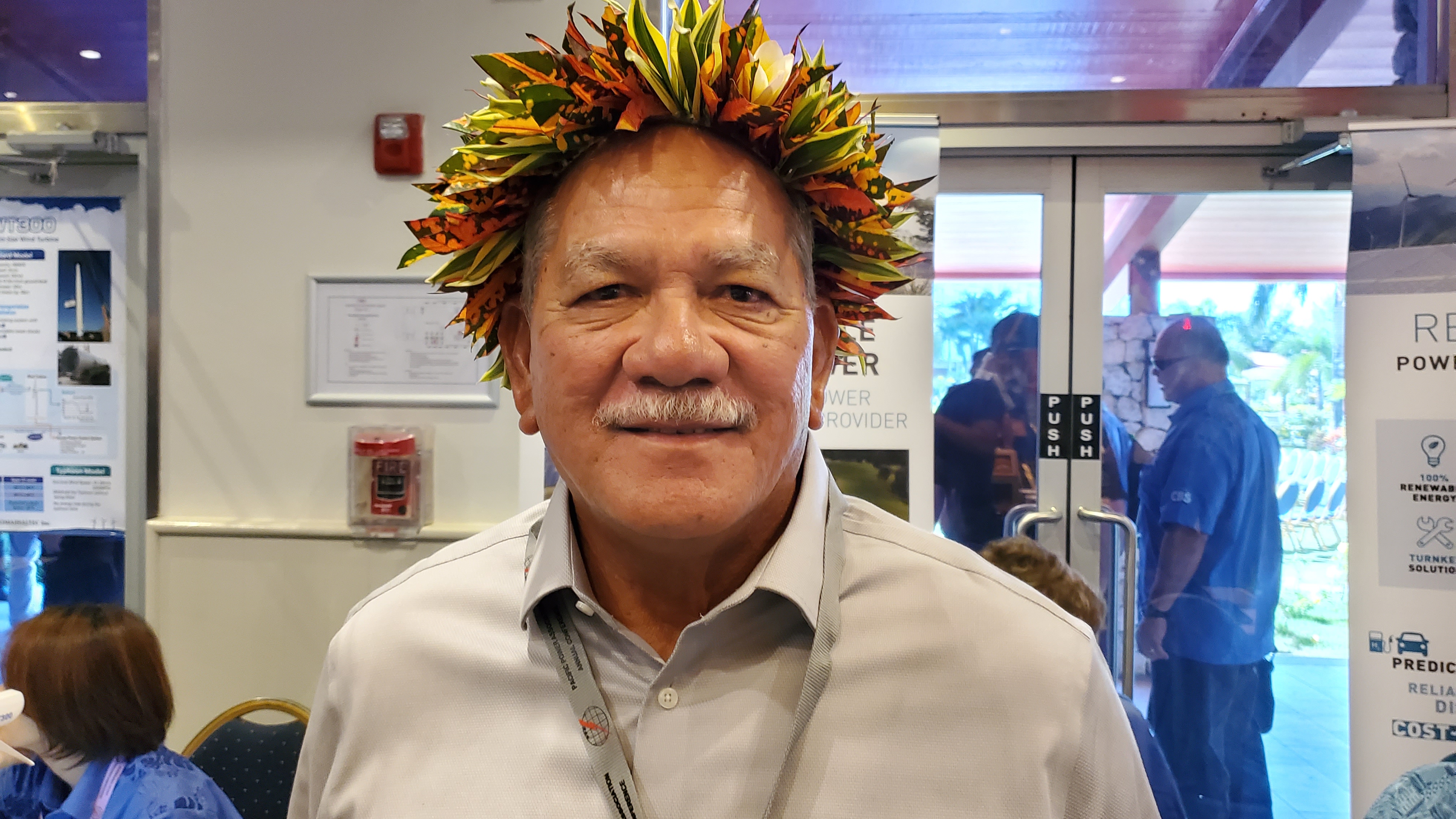
Edward Manibusan