Palacios requests Biden to initiate 902 talks
Gov. Arnold I. Palacios has sent a letter to U.S. President Joseph R. Biden Jr. requesting consultations between the CNMI and U.S. governments pursuant to Section 902 of the Covenant.
Palacios said in his letter dated April 26, 2024, a copy of which was obtained by Saipan Tribune Tuesday night, said for this round of consultations, the CNMI proposes to engage with the U.S. government on three priority issues: direct financial assistance under Section 702 of the Covenant, tourism and transportation infrastructure, and access to skilled labor.
The governor said the CNMI looks forward to the U.S. appointing a special representative so that the 902 consultation process can begin.
“My administration is ready to work with you and your special representative in furtherance of our mutual goal to improve the lives of the people of the Northern Marianas, consistent with our Covenant,” Palacios told Biden.
The Covenant provides that the U.S. and CNMI governments for the 902 talks every 10 years—if either government calls for it to consult on issues affecting their relationship.
On direct financial assistance, the governor said Section 701 of the Covenant reflects the aspirations of the people of the CNMI to join the American political family, and the commitment of the U.S. to assist the Commonwealth government in providing a progressively higher standard of living for its citizens.
He said the primary vehicle for achieving this commitment was Section 702, which once provided nearly $28 million annually in direct financial assistance to the CNMI government for economic development.
Palacios said unfortunately, U.S. Public Law 104-134 redistributed funds intended for the Commonwealth to other insular jurisdictions.
He said fully restoring 702 funds to the CNMI and adjusting for inflation would go a long way toward shoring up public services and providing relief to economically distressed citizens and small businesses today.
The governor said the CNMI urgently seeks direct and expanded financial assistance from the U.S. government, and flexibility to apply those funds to capital improvements, government operations, and economic relief programs.
On tourism and transportation infrastructure, Palacios said early on in his administration, he announced that the CNMI would pivot away from overreliance on tourism and investment from the People’s Republic of China to more sustainable markets in allied democratic jurisdictions like Japan, the Republic of Korea, and the Republic of China (Taiwan).
“We need the support of our federal partners to accomplish this pivot,” Palacios said.
He said CNMI’s efforts to revitalize the economy and especially the tourism industry in the post-COVID 19 era, however, are hampered by inadequate infrastructure at airports and seaports, and limited air and freight service to and from the islands.
Palacios said the CNMI seeks the assistance of the U.S. government in upgrading transportation infrastructure, securing new and expanded air service options, and relaxing cabotage restrictions to facilitate air service competition.
Regarding access to skilled labor, the governor said the CNMI is facing an accurate shortage of skilled workers in construction and other key sectors, imperiling timely completion of critical infrastructure projects.
He said many of these projects are funded by federal programs in defense, disaster recovery and economic resiliency.
Palacios said slow processing times affecting the CNMI-Only Transitional Worker (CW) visa program and inflexible restrictions in the H visa program exacerbate the already-challenging workforce issues and curtain CNMI’s ability to access the pool of skilled workers available in the region.
Meanwhile, he said, the CNMI’s exclusion from Wagner-Peyser programs and limited resources to support a robust apprenticeship program impair the Commonwealth’s ability to developed skilled workforce locally.
The governor said the CNMI seeks the support of the U.S. government in affording greater flexibility and efficiency in visa processing for skilled labor in the Marianas and parity in access to the full spectrum of workforce development and training programs available to other communities across the nation.
“The people of the Northern Marianas are proud Americans. We support the position and interests of our nation in the Indo-Pacific region, and we appreciate the partnership of the United States government in our shared endeavors,” Palacios said.
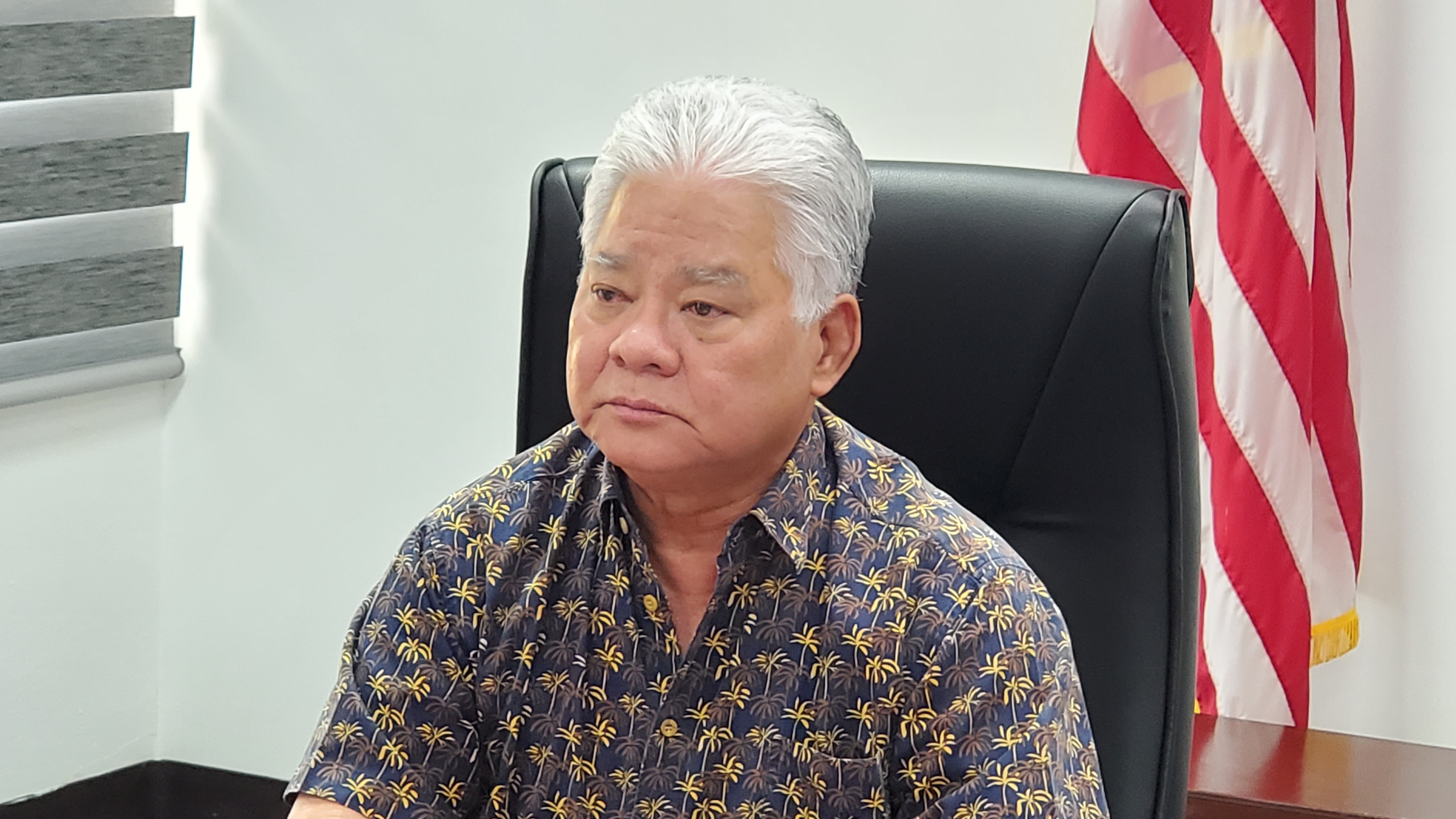
Arnold I. Palacios