Where America’s day begins and it begins with a surprise: Julian Assange’s court day
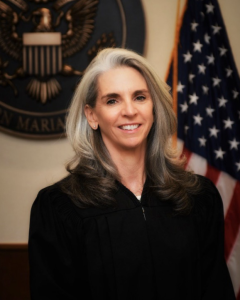
As dawn broke over the island’s pristine beaches, word spread like wildfire through the tight-knit community of 40,000. The tiny island of Saipan, accustomed to the rhythms of tropical life—swaying palms, gentle waves, and the occasional typhoon—was about to host an unexpected visitor. Julian Assange, the WikiLeaks founder who had spent years in legal limbo, was coming to Saipan, not far from his home country as far as the vast Pacific Ocean reaches. His purpose: to appear before Chief Judge Ramona V. Manglona of the U.S. District Court for the Northern Mariana Islands, 3,000 miles from Australia.
Not since the Emperor of Japan’s visit in 2006 had Saipan seen such a globally significant figure. Some call him a villain, others a hero.
I got a text from my son yesterday: “Julian Assange is coming to court at nine o’clock today.” I was shocked. After all, it’s not every day that a man who’s made headlines around the world shows up in our corner of the Pacific.
Early morning, the usually sleepy courthouse in the capital of Saipan had transformed into a hive of activity. Journalists from across Asia descended on the island, their camera equipment incongruously set around the parking lot. The local press was talking back and forth with the enthusiasm of a finished election.
Suddenly, the quiet street erupted into a flurry of activity as four SUVs and a van pulled up to the courthouse. The arrival sparked a frenzy among the waiting press corps. Photographers and writers scrambled forward, jostling for position like eager children rushing to the front of a dessert line. Being older and less nimble, I opted for a different strategy. I hung back, leveraging my professional-grade camera with its powerful zoom lens. From my vantage point, I managed to capture three crisp, tight shots of Julian Assange as he emerged from the vehicle and made his way into the courthouse.
The moment passed in a blur of flashing cameras and shouted questions. As quickly as it had begun, the commotion subsided as Assange disappeared behind the courthouse doors. With the initial excitement over, I carefully secured my trusty Nikon in my car. No photography would be allowed inside, and I wasn’t about to risk my equipment or my chance to witness history unfold.
Returning to the courthouse steps, I found my place among the first 10 people in line. As we waited to be admitted, a palpable sense of anticipation hung in the air. Here we were, on our small island of Saipan, about to witness a pivotal moment in a story that had captivated the world for years. I couldn’t help but feel a mix of excitement and disbelief. No recording devices or cameras would be allowed inside.
As I entered the second-floor courtroom, I scanned the faces around me—a mix of familiar locals and a few strangers, including reporters, attorneys, and law enforcement officials. The air buzzed with an energy rarely felt in our usually laid-back island setting. Most chatted or texted updates. Patiently, all awaited Assange’s entrance.
When Assange entered, the atmosphere changed. I was struck by his appearance. Tall and imposing at about 6’2”, he wore a blue suit coat that seemed a touch too snug. Despite a slight paunch, he stood erect, his blue eyes focused ahead. His trademark white hair was slicked back, and his complexion had a reddish tinge, due to his Northern European ancestry and likely from the toll his isolation had taken in addition to the years spent in confinement.
Judge Manglona entered the courtroom and proceeded to explain documents and ask questions. Throughout the proceedings, I found myself captivated by the interplay between the global and the local. Judge Ramona Manglona, a familiar face to many of us on the island, presided over a case with international implications. It was a stark reminder of how our small community can suddenly find itself at the center of world events.
As the judge methodically went through the plea agreement, Assange’s quiet “Yes, I understand” became a somber refrain. The courtroom, usually host to local matters, now echoed with discussions of national security and press freedom as legalese filled the air.
In true Saipan fashion, even this high-profile event couldn’t escape our island’s informal charm. When I sneezed during a quiet moment, I could have sworn I heard Judge Manglona acknowledge my outburst with a “Bless you, Mr. Benson.” It was a reminder that even in the most serious of circumstances, our island’s close-knit nature shines through.
Locals in the other overflow room were all abuzz when I sneezed and became part of the court record. Since my announcement for running for House of Representatives, I find myself in local crosshairs. Saipan is a commonwealth of the USA, and we are like a state.
Inside the courtroom, Chief Judge Ramona V. Manglona presided over proceedings that would determine Assange’s fate. The atmosphere was tense, yet punctuated by moments of unexpected levity. When asked if he was satisfied with his attorneys, Assange quipped, “Well, I’ll find out later,” earning chuckles from the gallery.
The critical time of the appearance before a U.S. federal judge arrived, time for the decision. Assange and his attorneys stood before the Judge, everyone holding their breath.
As Judge Manglona declared the sentence as time served, Assange became a “free man” subject to probation. A collective sigh of relief seemed to ripple through the courtroom and beyond. For Assange, it marked the end of a long and arduous legal battle. For Saipan, it was a moment of unexpected significance in the island’s long history.
“Court dismissed,” said the judge.
I watched as Assange embraced his team, a rare smile breaking through his stoic demeanor. People stood and chatted. The only interaction with anyone other than legal was a Chinese man who pushed his way to the gallery divider. Julian stood talking on the other side. The man had a book, “Odyssey” by Homer, he wanted signed. With a red Sharpie, he was accommodated by Julian.
All started moving to the exit. I walked out in front and to the side of Assange. I said quietly, “Good on ya.” He likewise quietly acknowledged my comment.
The press and observers gathered outside the courthouse doors to await the press conference. The crowd had enlarged. I was out of the building and stood close to the microphones. His two attorneys addressed those gathered. The theme was a sad victory: Julian Assange’s ordeal was over, but it was a loss for freedom of the press. He came out of the doors and into the cars, the photographers almost climbing into the van, pressing for the best shot of him.
The motorcade whisked off to the airport. He spent only 6-7 hours on the island. Here was a man who had changed the face of global politics and journalism, tasting freedom for the first time in years on our remote island.
Some find Assange a traitor to Western governments while others see him as a hero. The world has become a different place since Julian took refuge in the Ecuadorian Embassy in London; others see his leak of the Clinton and DNC emails as villainy. Hero or villain, maybe history will decide.
Del Benson is a photographer and House of Representative candidate for the CNMI. Check his work at https://www.delbenson.com/.

WikiLeaks founder Julian Assange exits the U.S. District Court for the Northern Mariana Islands amidst the throng of local and international media last June 26.
-DEL BENSON