CNMI participates in historic US territory summit in NYC
The Right to Democracy, a national nonprofit organization, convened representatives from all five U.S. territories for the “Summit on U.S. Colonialism” in New York City last October 2023 in the first such gathering of civil society from the territories since 1994.
Cultural leaders, artists, lawyers, and academics from all the territories built community with one another and strategized unifying themes and solutions for advancing democracy, equity, and self-determination.
Our island home in the Marianas exists on a delicate balance. A balance between the island environment—its lands, seas, and skies—and its people. However, our people know, perhaps too well, that outside forces often have an outsized impact on this balance. More specifically, the decisions of U.S. government officials and the acute lack of awareness many have about the Marianas.
However, such a plight is not unique to the CNMI, or even the Marianas. All five of the inhabited, yet unincorporated U.S. territories—the CNMI, Guam, American Samoa, Puerto Rico, and the U.S. Virgin Islands—face this same issue. And the same question of how to respond to such a challenge has continually been asked arguably since the first U.S. territories came into existence in 1898. Conversations about this issue have been had in many spaces in the Marianas over the years.
Yet rarely has there been a move to gather all the territories together in a single shared space to tackle the systemically racist nature of American second-class citizenship.
The CNMI team shared the Chamorro concept of “inafa’maolek”—roughly translated as “to make good”; in other words, reciprocity. The CNMI team highlighted this idea to demonstrate the irony that the U.S.’ relationships to all its territories are imbalanced and not reciprocal. People in the territories have been disproportionately impacted by U.S. militarization, environmental pollution, lack of voting rights, rising sea levels, and more frequent and intense tropical storms, among other issues.
A common thread amongst all the territories to address such imbalance is the need for more solidarity and to build stronger relationship networks between the territories. The territories have common challenges, but each also have a unique history, people, and culture that must be acknowledged.
In addition to working with one another, these territorial representatives also spoke with major foundations to raise awareness to the harsh realities that second-class citizenship poses to Americans that result from living without voting rights.
Co-sponsors of the summit included the Ford Foundation, Democracy Fund, and J.M. Kaplan Fund, with support as well from Covington & Burling LLP.
Learning about the similarities and differences between the territories was a healing experience for many, with various attendees moved to tears as emotions ran high from the intergenerational trauma rooted in genocidal colonialism and slavery. For advocates that have worked on ending U.S. colonialism for decades, as well as for people just learning about second-class citizenship, the summit was also at times a form of group therapy to know that they are not fighting these battles alone. The days of isolation into territorial silos separated by oceans are over, as the leveling influence of the internet is the key difference from 1994. Working together over thousands of miles and time zones via Zoom meetings or other social media mediums brings optimism and light to replace pessimism and darkness for those dedicated to democracy and self-determination.
As historic as the two-day “Summit on U.S. Colonialism” was for the territories, attendees are excited to continue their advocacy. The territorial stakeholders are already working on next steps to continue raising awareness, building alliances, and exploring creative ways to achieve self-determination for all territories and an end to second-class citizenship. Although the end product might be different for each of the territories, all agree to leverage democratic means to end systemically racist colonial structures in place for more than 100 years.
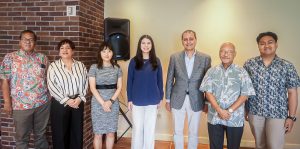
The CNMI team’s diverse representatives included local cultural icon and MANGO executive director Frances Sablan; former lawmaker and current Labor Secretary Leila Staffler; Mt. Carmel School educator Zeno Deleon Guerrero, Northern Marianas College professor William Fife; and community advocate and former lawmaker Sheila Babauta. (PR)
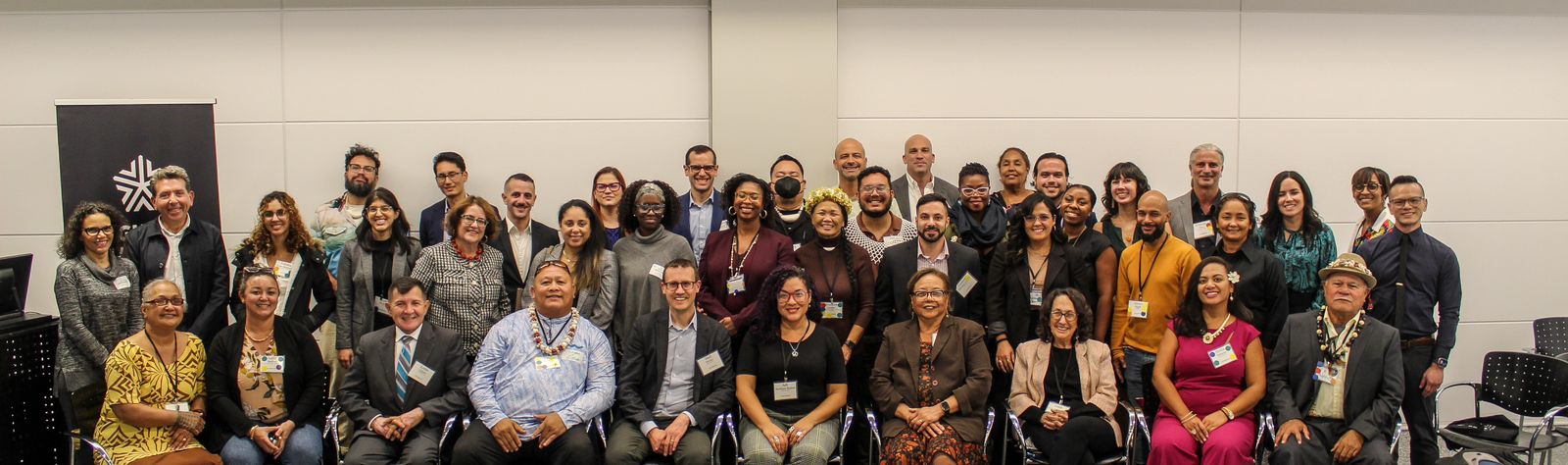
Representatives of the CNMI, Guam, American Samoa, Puerto Rico, and the U.S. Virgin Islands gathered in New York City in October 2023 for the first “Summit on U.S. Colonialism.”
-CONTRIBUTED PHOTO//

The CNMI team included MANGO executive director Frances Sablan; Labor Secretary Leila Staffler; Mt. Carmel School educator Zeno Deleon Guerrero, Northern Marianas College professor William Fife; and former lawmaker Sheila Babauta.
-CONTRIBUTED PHOTO